At the goldsmith's door the question begins: 21K or 24K? Why is the 18K gram cheaper? Understanding karats is the difference between a smart purchase that preserves your savings and paying for gold you never receive.
What does "karat" mean?
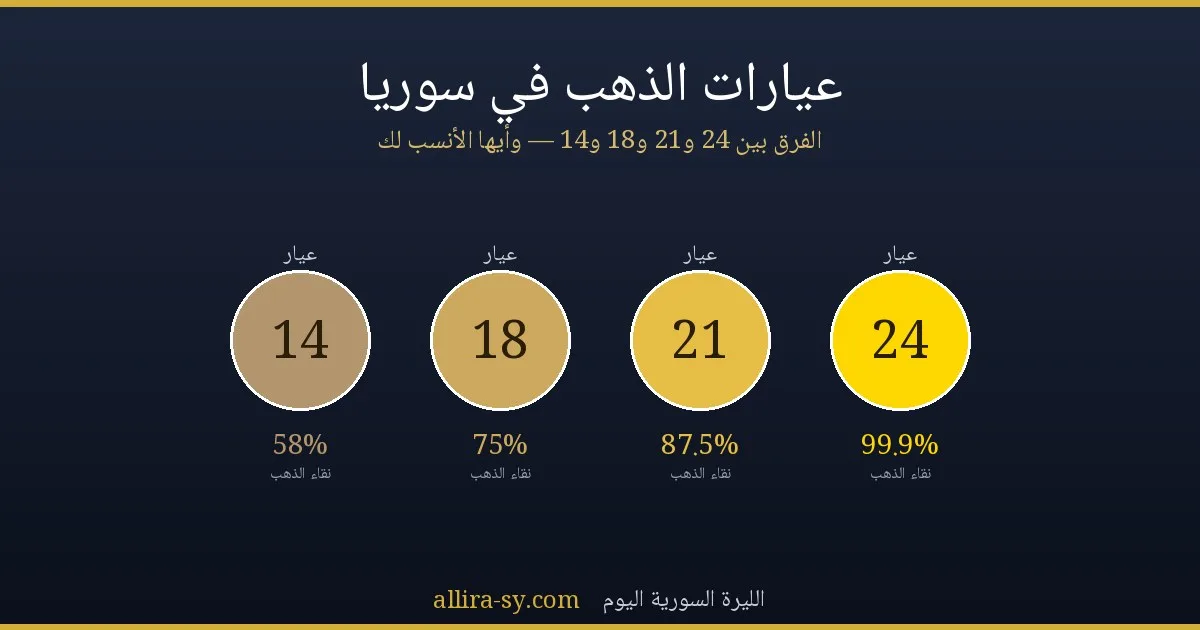
Karat measures pure gold content out of 24 parts. Pure 24K gold is 99.9%; lower karats mix in copper, silver or zinc for hardness and color.
| Karat | Purity | Most common use in Syria |
|---|---|---|
| 24K | 99.9% | Bars, gold liras, saving |
| 21K | 87.5% | The king karat — most jewelry and dowries |
| 18K | 75% | Modern and stone-set jewelry |
| 14K | 58.3% | Budget everyday accessories |
How is each karat priced?
All prices descend from one source: the global gold ounce divided by 31.1 grams, multiplied by the market USD rate, then by the karat's purity. Syrian gold therefore moves with two engines — the global ounce and the dollar — and the local gram can rise even on a day the ounce falls, if the dollar climbs more.
Track live prices per karat: 24K · 21K · 18K · 14K — buy and sell, in old and new pounds.
Which karat suits you?
For saving: 24K (bars, gold liras) or 21K — lowest making charges and easiest resale.
For daily wear: 18K is harder and more durable, but remember roughly a quarter of what you pay goes to non-gold metals and making charges you won't fully recover.