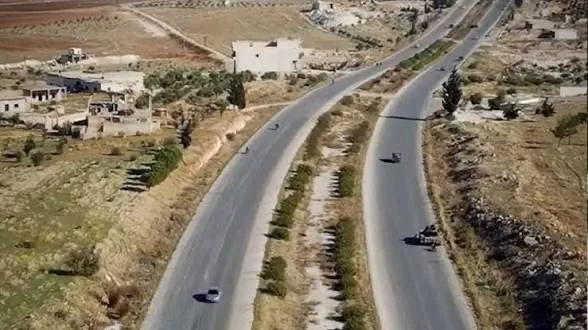
Syria's Transport Minister Yarob Badr announced the launch of seven tenders inviting domestic and international bids to implement strategic projects for rehabilitating the country's international road network, part of a broader plan to develop infrastructure and strengthen connectivity between provinces. The announcement came during a press conference reported by Ekhbariya Souria.
Mapping the Seven Projects Open for Bidding
| Project | Description |
|---|---|
| Nasib–Damascus | Rehabilitation as part of the M5 corridor |
| Damascus–Homs | Rehabilitation as part of the M5 corridor |
| Homs–Aleppo | Rehabilitation as part of the M5 corridor |
| Saraqib–Idlib | Link connecting to the M5 corridor stretching between the Turkish and Jordanian borders |
| Damascus–Palmyra | Construction of a second branch, converting it into a dual carriageway |
| Palmyra–Deir ez-Zor | Construction of a second branch, converting it into a dual carriageway |
| Consulting oversight | Two separate tenders to engage international consulting firms to oversee implementation |
The minister emphasized that these projects aim to accelerate the rehabilitation of the international road network, connect Syria's various regions, and transfer engineering expertise to staff at the General Establishment of Roads and Bridges and other national bodies involved in road construction. He noted that inviting international bids is intended to ensure the highest technical standards and draw on global expertise in execution and supervision.
A Parallel Track Toward Toll-Based Investment Roads
This announcement accompanies a separate track disclosed earlier by Moaz Najjar, Director General of the General Establishment of Roads and Bridges, concerning the update of feasibility studies for the North-South and East-West highways, in preparation for converting them into toll roads under a Build-Operate-Transfer (BOT) investment scheme aimed at linking Syria with neighboring countries through long-term investment partnerships. This financing model is widely used globally in major infrastructure projects, allowing governments to execute large-scale works without bearing the full financial burden, in exchange for granting investors the right to operate the road and collect tolls for a defined period before ownership reverts to the state.
These steps form part of broader efforts by relevant authorities to modernize the legislation and laws governing investment in Syria, creating a competitive environment capable of attracting global companies, as the country works to rebuild its logistics network as a cornerstone of comprehensive economic recovery.
Taken together, these tenders mark a pivotal step in Syria's infrastructure reconstruction path, bridging two complementary tracks: urgent rehabilitation of damaged vital roads, and the establishment of new investment models ensuring long-term maintenance and operational sustainability.