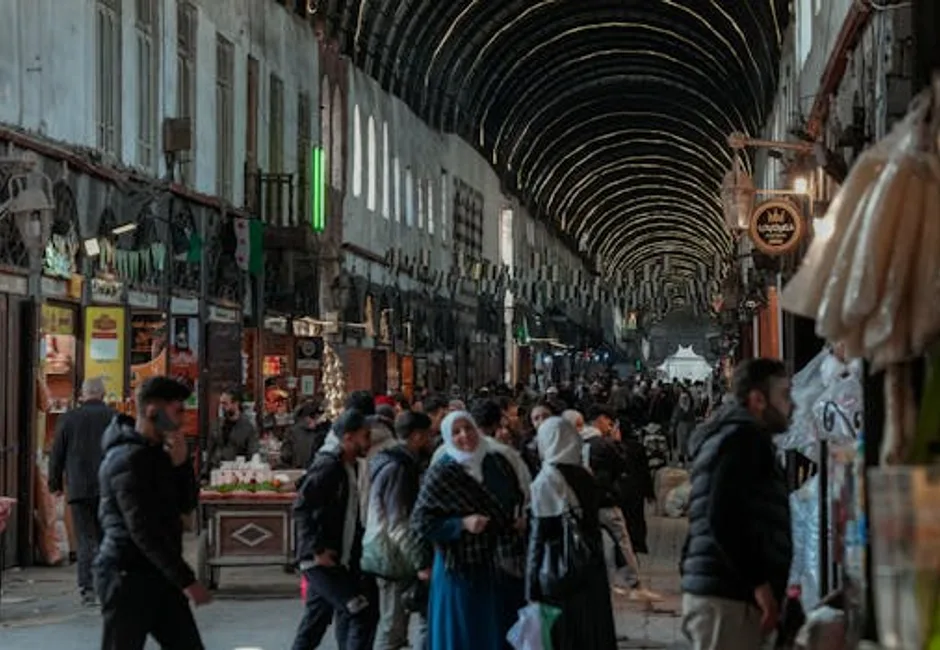
Economic circles recently saw an announcement regarding a package of measures and steps aimed at boosting women's participation in the local economic cycle. These steps come at a time when Syrian society seeks to activate all its productive capacities to achieve a degree of living stability and stimulate local market activity. The focus on women's economic empowerment is not merely a social step, but rather a fundamental driver for stimulating small and micro-enterprises, which form the backbone of the economy at the current stage.
These measures vary between credit facilities, intensive training programs, and exemptions from some fees to ensure the greatest possible involvement of women in the labor market, whether through self-employment or establishing home-based projects capable of growth. These decisions are expected to directly reflect on the budget of the Syrian family, as the increase in income sources contributes to improving purchasing power and alleviating daily financial burdens.
Details of financial facilities and loans available for women's projects
The new measures are likely to focus on activating the role of specialized banks in microfinance, to provide soft loans starting from approximate amounts such as 10 million Syrian Pounds and reaching up to 50 million Syrian Pounds, depending on the nature of the project and its economic feasibility. These loans usually aim to cover the costs of raw materials or purchase simple machinery such as sewing machines, home food processing equipment, or even small-scale agricultural technologies.
These loans, as expected, feature flexible repayment periods that may extend for years, with grace periods that may reach six months before starting to pay installments. This approach helps the Syrian woman to start production and achieve an initial profit before committing to financial burdens. However, the fluctuating exchange rate and its impact on the prices of imported equipment remain one of the challenges that female borrowers must take into consideration when studying the economic feasibility of their projects, to ensure business sustainability without financial setbacks.
The impact of women's production on the local market and the exchange rate
When thousands of women turn towards local production, this necessarily leads to an increase in the supply of goods and services in the local market. The production of clothing, dried food products, and handicrafts reduces the need to import similar alternatives, which indirectly contributes to alleviating pressure on the demand for foreign currencies and supports the stability of the Syrian Pound in the long term.
Furthermore, transforming homes into small productive units contributes to reducing the high operating costs associated with renting shops or large energy consumption in major factories. This cost saving allows for offering products at competitive prices that suit the income of the average citizen, which revitalizes buying and selling activity in popular markets and commercial centers alike. Self-reliance in securing basic needs is an effective economic strategy to confront rising inflation.
Vocational Training and Digital Transformation for Women's Empowerment
The new measures are not limited to financial support only, but also include educational and training pathways aimed at raising the level of technical skills among women. This includes courses in project management, e-marketing, and how to deal with digital platforms for selling products. In light of global transformations, accessing customers online has become a necessity, not a luxury, which opens wide horizons for Syrian women to transcend the geographical boundaries of their local markets.
We are likely to see cooperation between the public and private sectors to organize periodic exhibitions to display the products of these ladies, which gives them an opportunity for direct communication with consumers and major traders. This type of logistical support is no less important than financial support, as the marketing dilemma is often the biggest obstacle to the continuity of small projects. Teaching the lady how to price her product based on the cost of raw materials and the price of gold or currencies ensures her a profit margin that protects her from inflation losses.
The Real Challenges and the Other Side of the Economic Scene
Despite the positive expectations for these measures, there are tangible challenges that cannot be overlooked. Realistically, women's projects face problems related to securing continuous energy sources, such as electricity and fuel, which may unexpectedly raise production costs. Furthermore, bureaucracy in obtaining the necessary licenses may pose an obstacle for some, which requires genuine simplification of administrative procedures to keep pace with the required speed of implementation.
Furthermore, the limited purchasing power of the Syrian consumer may make it difficult to move large volumes of products initially. Consequently, these measures must be accompanied by monetary policies that ensure price stability to prevent inflation from eroding income increases. The balance between granting loans and providing a stable business environment is the sole guarantee for the success of these initiatives and for transforming them from mere paper decisions into a tangible reality that improves people's livelihoods.
Future Outlook: Will Women Become the Driving Force of the Household Economy?
These measures are seen as the beginning of a new phase based on grassroots development, where the individual is both producer and consumer simultaneously. If these plans are implemented effectively, an increase in the percentage of women's contribution to the GDP is expected during the next few years. The success of one woman in establishing a small workshop and employing other women with a monthly salary ranging, for example, between 400,000 to 800,000 Syrian Pounds, means protecting several families from market fluctuations.
Ultimately, the focus remains on the Syrian woman's capacity for adaptation and innovation as the cornerstone. The announced measures are supportive tools, but genuine success hinges on sustained support, the development of regulatory laws for small businesses, and the creation of a fair competitive environment. The Syrian citizen anticipates the tangible results of these steps, hoping they will contribute to alleviating daily economic pressures and outlining a more stable and prosperous future for all.