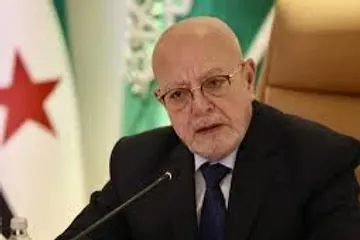
In a diplomatic move carrying many economic aspirations, the Syrian Foreign Minister recently met with his counterpart from a friendly country in bilateral talks focused on strengthening common relations. These meetings, while appearing political on the surface, often serve the economic and developmental interests of the countries involved at their core. For the Syrian citizen, following the details of such meetings is not merely curiosity, but rather a window into the country's economic future and their potential impact on the value of the Syrian Pound, living costs, and job opportunities.
Every diplomatic meeting at this level opens doors for broader dialogues that may include vital trade and investment files. These discussions are expected to have addressed ways to enhance trade exchange, remove obstacles to the flow of goods, and perhaps open credit lines or financing facilities for vital projects in Syria. These steps, even if their results are not immediately apparent, constitute a fundamental building block in building a stronger and more stable economy, which will positively reflect on every household in Damascus, Aleppo, Homs, and every Syrian city and village.
Horizons of economic and trade cooperation
The most prominent points discussed likely concerned strengthening economic and trade cooperation between the two countries. This means new opportunities to increase exports of Syrian products, whether agricultural from the plains of Hauran and Al-Ghab, or industrial from factories in Aleppo and rural Damascus. Conversely, these meetings may contribute to facilitating the import of essential materials needed by the Syrian market, such as raw materials for industry or some consumer goods at more competitive prices. The more trade movement and exchange of goods increase, the more vibrant local markets become, and the less pressure on the Syrian Pound, which may contribute to improving its purchasing power.
According to economic reports, international partnerships play a pivotal role in revitalizing economic sectors. For example, such meetings can pave the way for joint investments in vital sectors such as renewable energy, or infrastructure development in cities like Latakia and Tartus to enhance port activity. These investments not only bring capital but also provide job opportunities for Syrian youth and contribute to the transfer of expertise and technology, which benefits the Syrian economy as a whole.
Positive effects on the Lira and prices
When economic relations improve and opportunities for cooperation increase, this often reflects positively on the stability of the Syrian Pound's exchange rate. An increase in the flow of foreign currencies through exports or investments reduces pressure on the Pound and supports its value. This directly means that the cost of importing essential goods, from food to fuel, may see stability or even a decrease, which alleviates the burden on the Syrian citizen who suffers from price fluctuations.
Also, the availability of goods at reasonable prices contributes to curbing inflation, which is a major challenge for the Syrian economy. Diplomatic talks that open new trade horizons can ensure the continuity of market supplies and provide wider options for consumers in cities like Homs, Sweida, and Daraa, which enhances market confidence and reduces the state of uncertainty that negatively affects purchasing and consumption decisions.
Development projects and job opportunities
The impact of these meetings is not limited to direct trade and currency stability, but extends to include broader opportunities for development and reconstruction. It is likely that the possibility of financing major projects in infrastructure sectors, such as roads, bridges, and electricity and water networks, will be discussed. These are essential for rebuilding what was damaged in areas like Deir ez-Zor. These projects not only improve the quality of services but also create thousands of direct and indirect job opportunities, which contributes to absorbing unemployment and raising the standard of living.
Focusing on sustainable development and building a resilient Syrian economy capable of facing challenges is the ultimate goal behind these diplomatic efforts. The more external cooperation increases, the greater the ability to implement development projects in various governorates, from developing the agricultural sector in Qamishli to supporting small and medium industries. The matter requires patience and follow-up, but every step in this direction is a step towards a better future for the Syrian citizen and the Syrian economy as a whole.