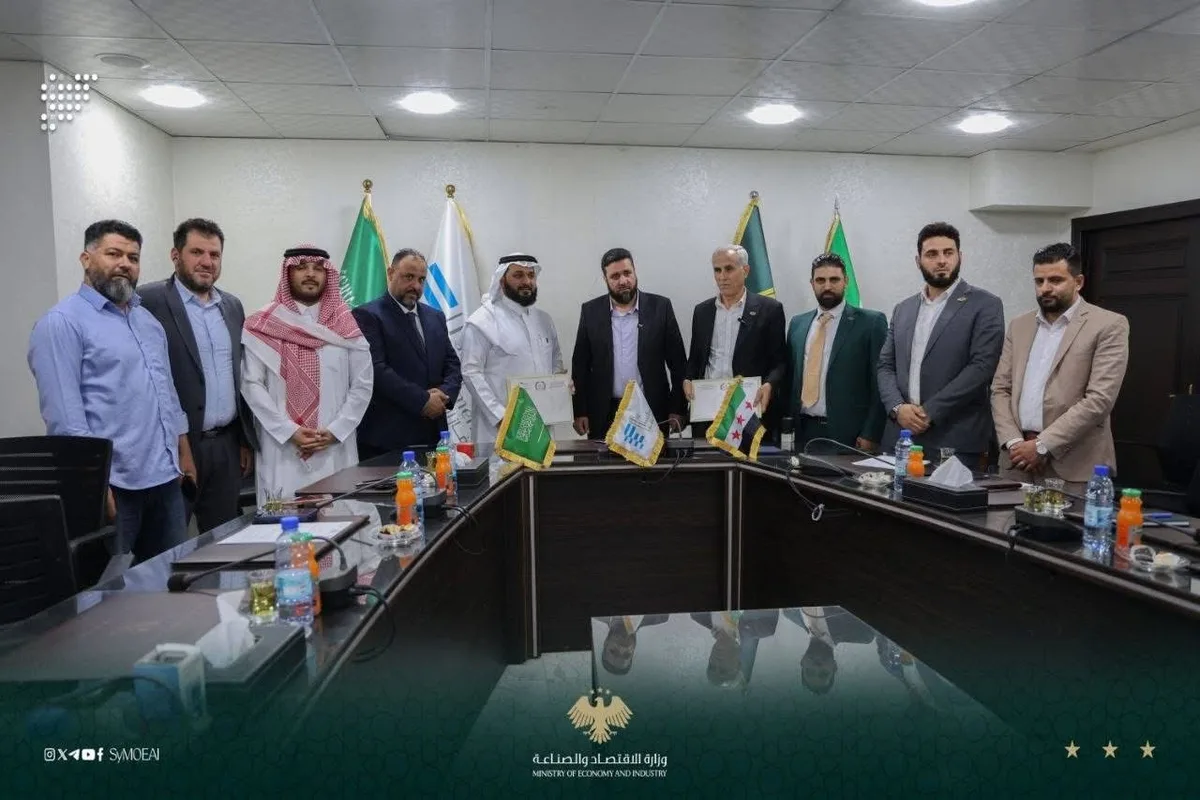
Agreement to Develop Government Mills
On Tuesday, the Ministry of Economy and Industry revealed the signing of a significant Memorandum of Understanding. The MoU, concluded between the Syrian Grains Establishment and Saudi Faz Investment Company, aims to develop and operate a group of government mills located across several Syrian governorates.
Integrated Rehabilitation and Operation Program
According to the Ministry, the agreement includes a comprehensive program for the rehabilitation and development of the mills. This encompasses the introduction, supply, and installation of modern production lines, equipment, and technologies, along with undertaking operation, management, and maintenance tasks.
Enhancing Efficiency and Food Security
This cooperation aims to modernize the flour and semolina production system to enhance operational and productive efficiency, within the framework of public-private partnership. Both parties affirmed that the project represents an important step to support the national economy and achieve food self-sufficiency by increasing production capacity.
First Phase Targets 11 Mills
The first phase of this project targets the rehabilitation and operation of 11 main mills. Among these, the Ministry mentioned Al-Yarmouk Mill in Daraa Governorate, Al-Rashid Mill in Raqqa Governorate, and Idlib Mill in Idlib Governorate, with the aim of supporting the grain sector.
Rehabilitation of Qalaat al-Madiq Silos in Hama
In a related context of supporting the grain sector, Hama Governorate had clarified last February its readiness for the 2026 wheat season. This readiness is being achieved through the rehabilitation of the Qalaat al-Madiq silos in the Al-Ghab Plain, to enhance storage preparedness.
Extensive Maintenance Work
Maintenance work on the silos began four months ago, according to the Hama branch of the Syrian Grains Establishment. These works include renovating administrative buildings, refreshing paints and tiles, repairing plumbing and electrical installations, in addition to repairing damaged storage cells and installing new metal roofs.
Increasing Storage Capacity and Relieving Pressure
Engineer Mohammed Awad Al-Sharbaji, Director of the Syrian Grains Establishment branch in Hama, stated that these works aim to restore the silo to service with a storage capacity of approximately 140,000 tons. This is expected to relieve pressure on the Shattah and Al-Suqaylabiyah silos and reduce waiting times for farmers.
Strategic Importance for Food Security
Al-Sharbaji added that expanding storage capacity contributes to reducing losses and improving strategic inventory management, thereby enhancing local food security. Furthermore, the geographical distribution of reception centers reduces transportation costs for farmers and mitigates logistical bottlenecks.
Keywords
- Syrian Economic News
- Syrian Grains Establishment
- Ministry of Economy and Industry
- Saudi Faz Company
- Mill Development
- Food Security
- Grain Silos
- National Economy
- Public-Private Partnership